The Institute for
Responsible Superintelligence
RESI is an independent nonprofit research institute based in Cambridge, Massachusetts, building the scientific foundations for making superintelligence safe by design.
Safe by design means safety properties are specified in advance and achieved by mechanisms whose guarantees can be analyzed before deployment.
As AI systems become more capable, we need to understand what will keep them trustworthy and under human control. RESI brings technical, legal, and economic research together around that question, drawing on the scientific approach that transformed modern cryptography.
The modern cryptography precedent
Long ago, encryption schemes were ad hoc: constantly broken, red-teamed, and patched. Modern cryptography began when researchers formulated definitions of computational security and invented primitives that could provably satisfy them under explicit mathematical assumptions: public-key encryption, digital signatures, zero-knowledge proofs, multi-party computation, and obfuscation. These inventions have withstood decades of attacks and enormous increases in computing power.
RESI is a bet that such guarantees are possible for superintelligence safety, and that it will happen by bringing together researchers who aim their efforts at responsible superintelligence, using frontier AI tools.
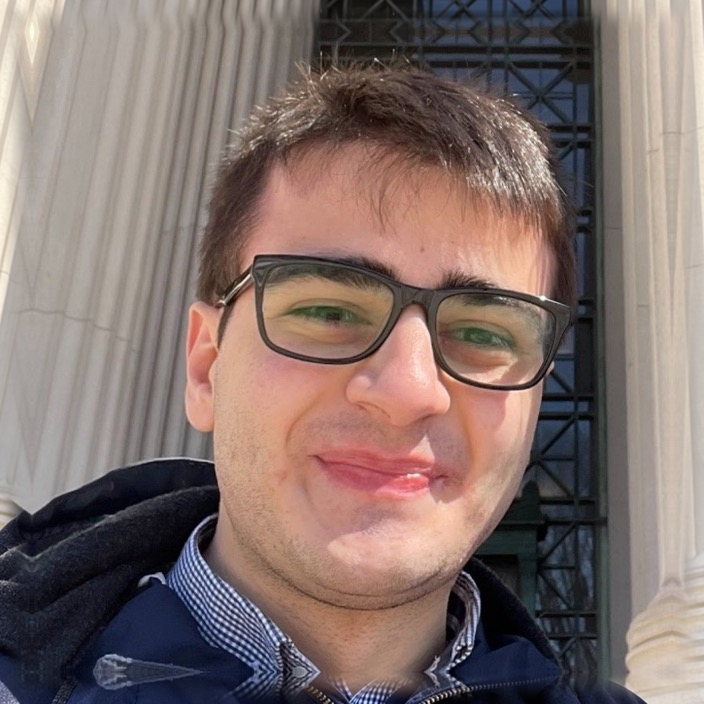
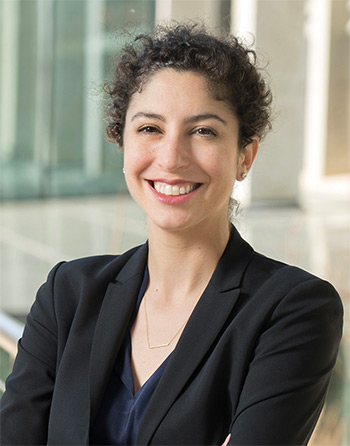
Founders

Shafi
GoldwasserMIT cryptographer and Turing Award winner known for the foundations of modern cryptography and zero-knowledge proofs.

Adam
Tauman KalaiAI safety and ethics researcher, previously at OpenAI, whose work spans learning theory, game theory, fairness, and frontier-AI practice.
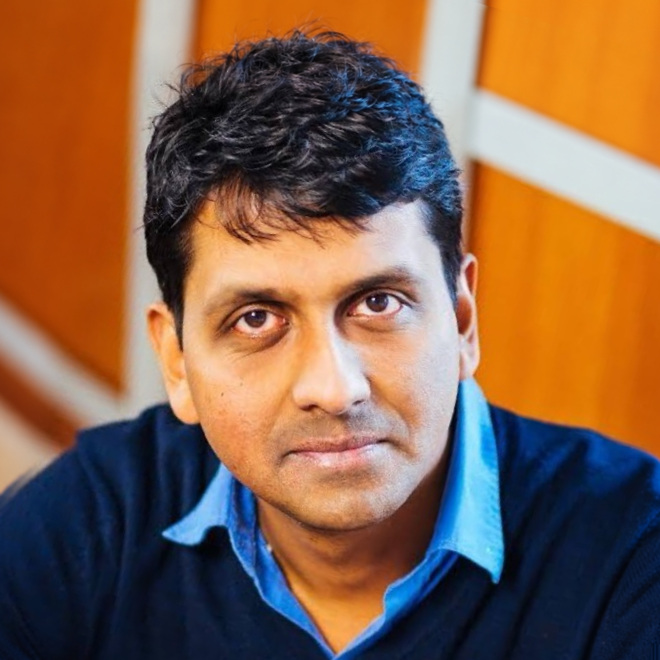
Vinod
VaikuntanathanMIT cryptographer and Gödel Prize winner known for foundational work in lattice-based cryptography and fully homomorphic encryption.














Research community
Announcements
Formal verification at RESI
Adam Chlipala introduces RESI’s formal-verification research agenda.
Can the Institute for Responsible Superintelligence save us from rogue AI?
A profile of RESI and its approach to AI safety.
Launching RESI
Adam Tauman Kalai introduces the institute, its research community, and its scientific aims.
Key research areas
Verification and oversight
What can a less capable overseer reliably verify about a more capable AI’s properties, answers, and actions without reproducing all of the system’s work?
Control and delegation
What authority can we delegate to AI while preserving our ability to intervene as AI becomes more intelligent than us?
Composition
Which safety properties can be better achieved when connections between models, tools, and agents are limited?
Shaping multi-agent dynamics
How should we design agents and structure their interactions to build safe multi-agent systems with provable guarantees?
Support independent research on safe superintelligence
Donations will enable us to bring in more researchers, especially postdocs and junior researchers, and further accelerate our research using AI. We also welcome support through compute credits and infrastructure.
Supported by grants from Coefficient Giving, Schmidt Sciences, and AISTOF. Fiscally sponsored by Edward Charles Foundation.